In February, the Seattle Social Housing Developer announced a tax windfall, more than double expected revenues: $115 million. SSHD has since revised that figure upward, now touting a $130 million haul for 2026 (2.6X the original projection of $53 million).
The news has been met with glee by supporters and scrutiny by others. Here are some of the responses:
From the mayor:
“There’s a lot of wealth in the city, and it’s very gratifying to know that we’re going to be able to use a very little bit of that wealth and put it to work building housing,” said Mayor Katie Wilson in her first State of the City address.
From an affordable housing consultant:
“SSHD plans to use those dollars to buy existing housing rather than add to Seattle’s housing stock…Will that materially contribute to addressing Seattle’s housing crisis? No,” said James Madden in a Seattle Times opinion piece.
House Our Neighbors, the advocacy group behind the SSHD initiatives, put the budget windfall into the broader context of the affordable housing challenge.
“It is a fraction of the money needed to address the housing crisis in Seattle. King County estimates that it needs more than 308,000 new homes over the next 20 years, at a cost of more than $3.96 billion per year beyond funding already available.”
Mayor Wilson has claimed SSHD will help solve the housing crisis “at scale.” And yet the early results raise questions about what “scale” means in practice.
At scale? 3 years, $130 million, 300 units “acquired”
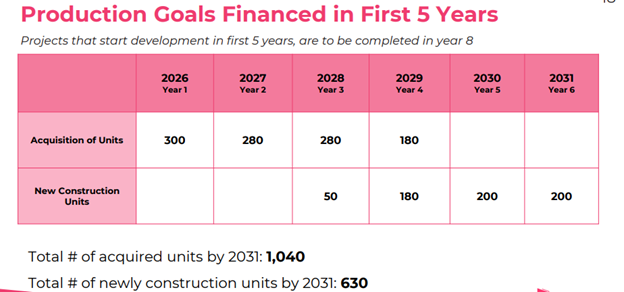
After three years of planning and with $130 million in hand, SSHD says it will acquire about 300 units by the end of this year. Those units will exclusively come from purchasing existing buildings. New construction units are not expected until at least 2028, assuming development timelines hold (see previous report on faltering timelines.)
Looking six years out, SSHD will produce 1,670 units—fewer than half of which will be new, by its own estimates.