
We Sure Love Our Parks
Seattle’s parks and open spaces are essential to the city’s livability and identity. In a 2021 Seattle Parks and Recreation (SPR) survey, 97% of respondents said the parks and recreation system was important to their quality of life, while 73% considered it extremely important.
To ensure stable, long-term investment in Seattle parks, voters approved Proposition 1 in 2014, establishing the Seattle Park District. It provides a dedicated funding source that enables SPR to plan and maintain facilities over time, rather than depend on temporary levies.
In the first of a two-part series, this post will explain the history of the Park District and review its original goals. Next post will look at the progress achieved and opportunities for continued improvement.
What is the Seattle Park District?
Before the Seattle Park District was established, park funding depended on the General Fund and temporary voter-approved levies. Parks were oftentimes underfunded, as they competed with major budget staples like public safety and transportation for general fund dollars.
Short term measures such as the 2000 and 2008 parks levies provided essential support for new facilities, but did not account for ongoing maintenance and operations, resulting in parks falling into disrepair between levies.
Seattle Park District collects property taxes, with the ability to levy up to $0.75 per $1,000 of assessed property value. It operates on a six-year budget cycle and is a significant funding source for SPR (around 30% of the operating budget and 57% of capital budget in 2025).
The Seattle Parks District is governed by the Seattle City Council, acting as Park District Board, with oversight from the citizen-based Board of Parks and Recreation Commissioners to ensure transparency and accountability.
Source: SPD
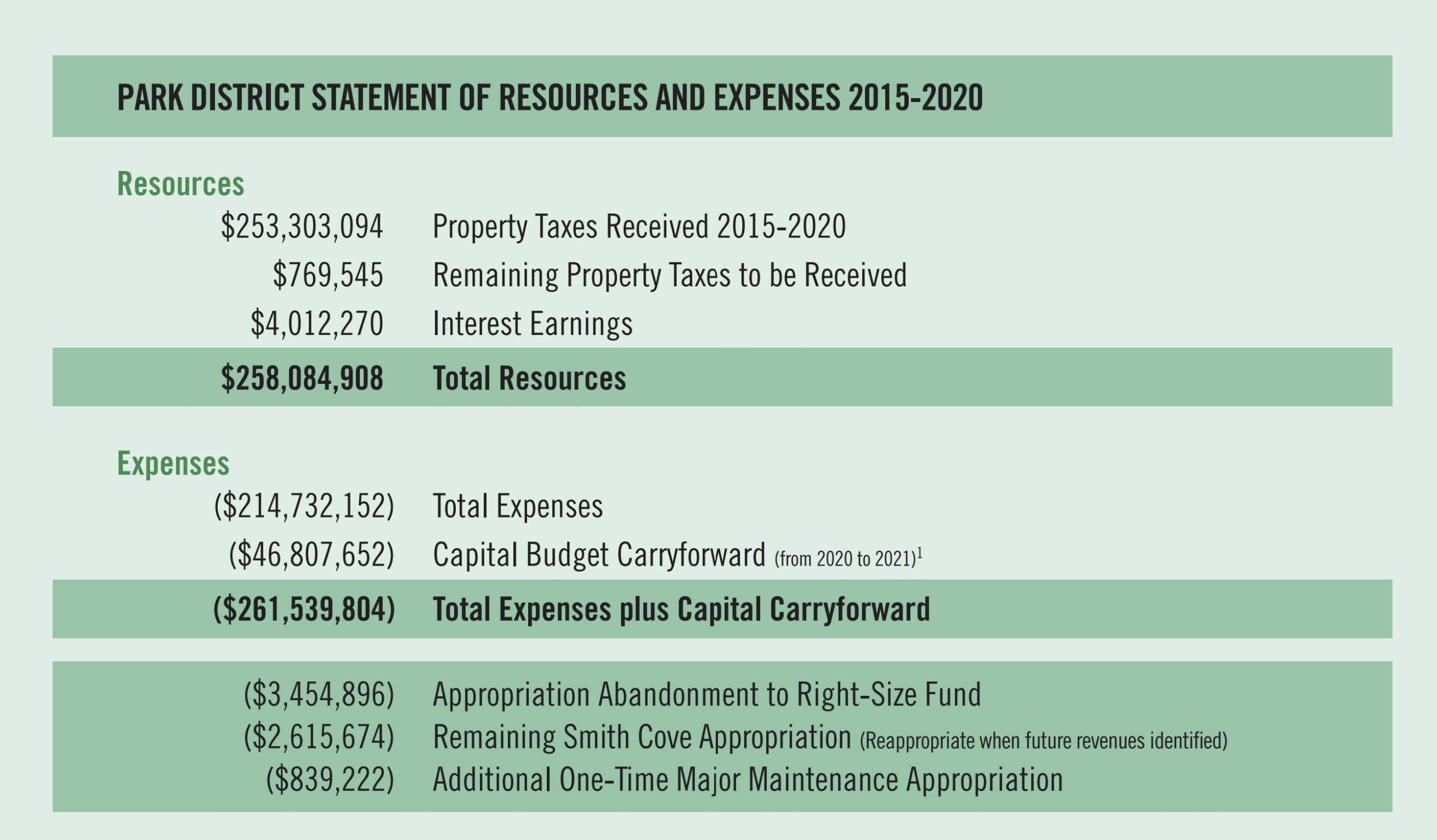
The first six-year cycle of the Seattle Park District, which ran from 2015 to 2020, generated approximately $253 million in property tax revenue. Because funds from the levy weren’t available until 2016, the City of Seattle provided a $10 million interfund loan in 2015 to launch early maintenance projects, repaid once revenues were received. One-year budgets followed in 2021 and 2022 due to the COVID-19 pandemic, while the six-year cycle resumed in 2023 and continues through 2028.
Initial Goals
The Seattle Park District was founded on a “Fix It First” approach, prioritizing a major maintenance backlog while also planning new facilities or programs. Its initial goals were to:
- Provide reliable funding for park operations, maintenance, and capital projects, independent of the city’s general fund and temporary levies.
- Address a $267 million maintenance backlog.
- Improve equity in park access and quality across neighborhoods.
- Expand programs for youth, seniors, and underserved communities.
- Support green space restoration and sustainability projects.
Results of First Budget Cycle: 2015-2020
Source: SPD
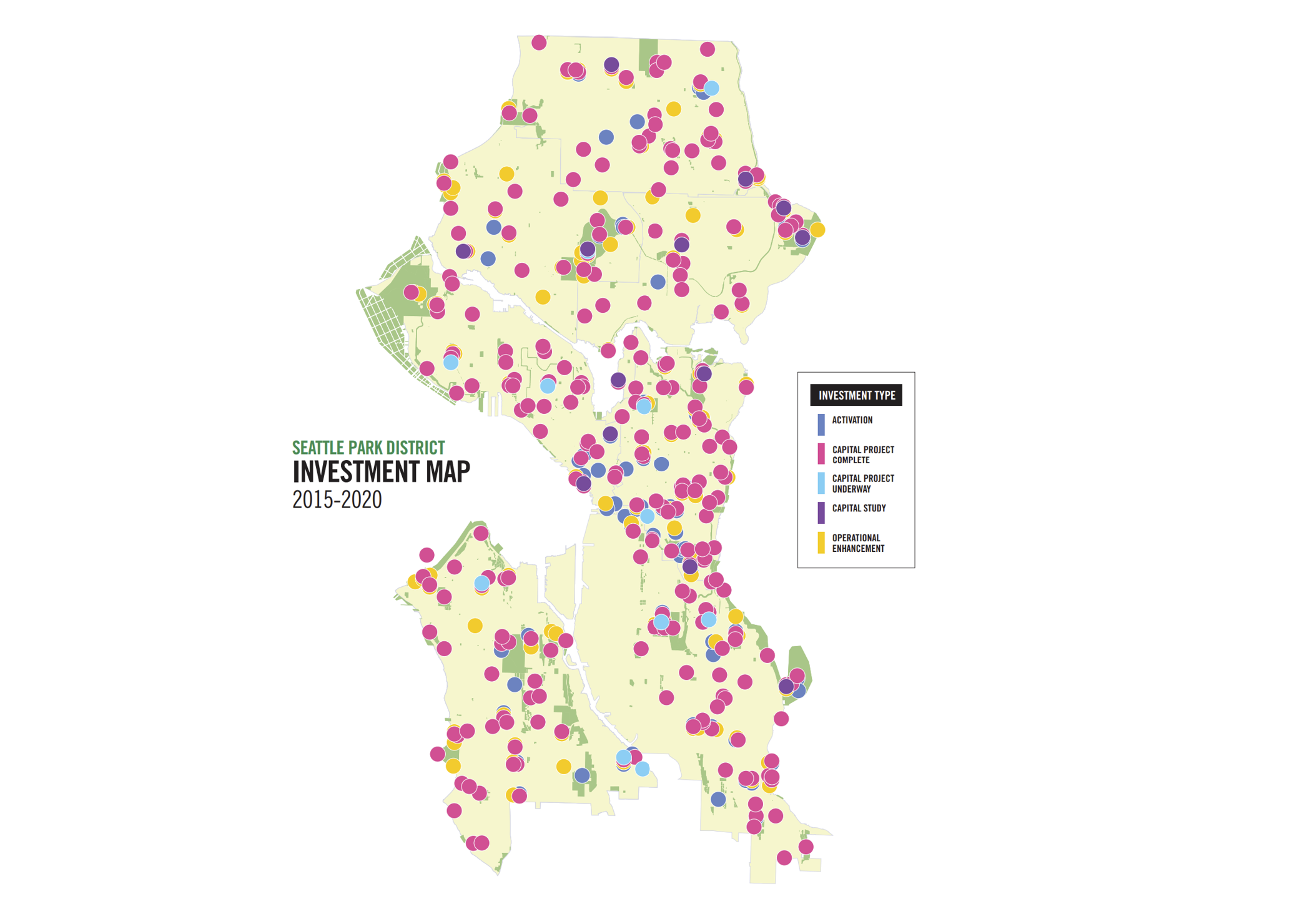
Seattle Park District largely accomplished what it set out to do across four main areas of investment:
- Fix It First: By the end of 2020, the Park District completed 123 major maintenance projects, surpassing its goal of 120 projects. This included maintaining the Woodland Park Zoo and Seattle Aquarium, rehabilitating community centers, and restoring hundreds of acres of the urban forest through the Green Seattle Partnership.
- Maintaining Parks and Facilities: It funded day-to-day maintenance of parks and facilities, including off-leash dog areas and P-Patch community gardens.
- Programs and People: The District launched three community programs—Recreation for All, Get Moving, and Put the Art in Parks. It also supported community center operations and programs, eliminated drop-in fees in some facilities, expanded scholarships, and grew youth and senior offerings, serving over 6,000 youth and providing 22,000 meals annually for seniors.
- Building For the Future: Seattle Park District invested $214.7 million to acquire and develop parks, renovate facilities, improve management, and complete dozens of new parks projects while some were delayed or scaled back due to COVID-19.
Adjusting for the Pandemic
The Seattle Park District adapted by redirecting resources to essential services, including community support programs, enhanced cleaning, and emergency infrastructure, while delaying or reducing some capital projects in 2021 due to revenue shortfalls. In 2022, the district restored funding for major maintenance, equity initiatives, and key capital projects, while continuing to prioritize community access, recreation programs, and park improvements. These adjustments ensured continued service and support for vulnerable communities despite pandemic challenges.
Current Budget Cycle Goals and Progress
The Seattle Park District resumed its six-year budget cycle in 2023, focusing on improving park access, safety, sustainability, and equity. Highlights for this cycle include:
- Accessibility
-
- Open 12 new park sites totaling over 10 acres.
- Double the equity fund to $3 million to support park improvements in under-resourced neighborhoods.
- Keep 129 bathrooms open year-round.
- Environmental Sustainability
-
- Renovate community centers to be climate conscious.
- Plant over 600 additional trees in parks to increase urban tree canopy and mitigate heat islands.
- Maintenance, Renovations, and Safety
-
- Making major community center renovations at Queen Anne, Lake City, Green Lake/Evans Pool, and Loyal Heights.
- Add 26 Park Rangers (for a total of 28) to enhance safety.
- Add a new team of 5 employees to respond to graffiti and vandalism.
- Renovate 27 restrooms.
Overall progress
While still early in the budget cycle, improvements are underway. As of the 2024 annual report, the Seattle Park District has expanded recreation and equity programs, restored thousands of native plants and trees, renovated several parks and community centers, and strengthened safety, sustainability, and access across the park system.
Room for Improvement
Bathroom cleaning and availability, while a small portion of operations, significantly impacts user experience. A 2025 audit found that SPR is not meeting its target of cleaning the restrooms two to three times per day. While SPR handles daily operations, the Park District provides the budget for staffing and maintenance, sets priorities, and monitors performance to ensure SPR meets operational standards.
Outlook and Budget Shortfalls
Although the Seattle Park District is a dedicated funding source, the City of Seattle reallocated $7.5 million in in 2026 to cover a General Fund shortfall for essential programming, highlighting the risk such one-time shifts pose to the financial stability the Park District was created to uphold.
Did Seattle voters get what they voted for in Prop 1? The Seattle Park District was created to address a hefty maintenance backlog, provide stable funding for long term goals, and expand programs — and it largely delivered.