
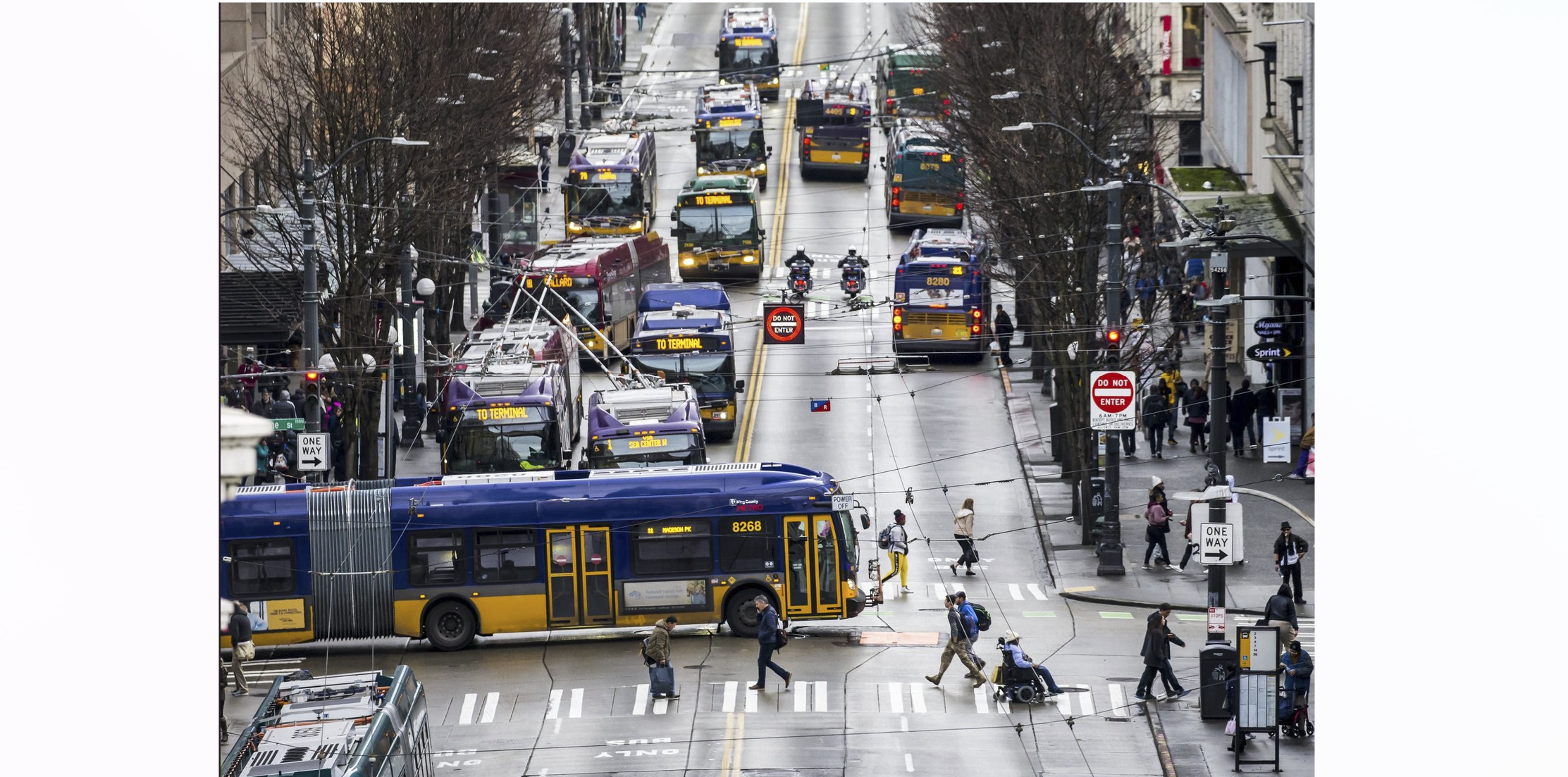
After pouring nearly $2 billion into the transportation system over nine years, how is the transportation performing today? Are the roads safer and smoother? Is traffic less congested?
The City tracks data that can answer some of these questions.
On the question of safety, the City has an ambitious goal called Vision Zero, which aims to end traffic deaths and serious injuries by 2030. In SDOT’s most recent traffic report, police-reported collisions peaked near 12,000 in 2016 but were reduced nearly in half by 2023, even as the population grew significantly.
However, major crashes—ones that resulted in death or serious injury—are on a different track. Since the Vision Zero program was launched in 2015 and through the course of the Levy improvements, major crashes with death or injuries have increased 84%.
SDOT is also in a continual push and pull with a maintenance backlog. Even as investments are made in repaving and pothole repairs, the percentage of roads requiring significant improvements remains stubbornly consistent. In 2014, before the Levy to Move Seattle was passed, 35.7% of roads were in poor or very poor condition. By 2023, one year before the end of the Levy, that percentage inched up to 38.6% The average pavement condition was essentially unchanged. It would be a reasonable question to ask: how much worse would roads be if the Levy investments hadn’t been made?
The state of congestion is the most difficult to assess. The City does not regularly report on a metric that analyzes travel time or free-flow of traffic. But it does share data on traffic volumes, which are down across all modes of transportation—vehicle, bike, and transit—since peaking in the years before the pandemic.
What’s next
Last year, voters once again pledged their support for transportation projects, approving an even larger tax program. The new 2024 Seattle Transportation Levy is expected to raise $1.55 billion over eight years and will continue, revive, or expand upon the work done through the Levy to Move Seattle. The bridges that fell off the last seismic upgrade list are due, this time, for renovations. Transit corridors and the Graham St. light rail station will enjoy heavy investment. And the road repair program—the one facing a persistent backlog—will see its budget double.
But if the Move Seattle track record is any guide, the new Levy goals and budget may be considered a roadmap, not the destination. As the program progresses, the City will likely reassess and adapt continually to changing conditions, much like it did over the past decade.