
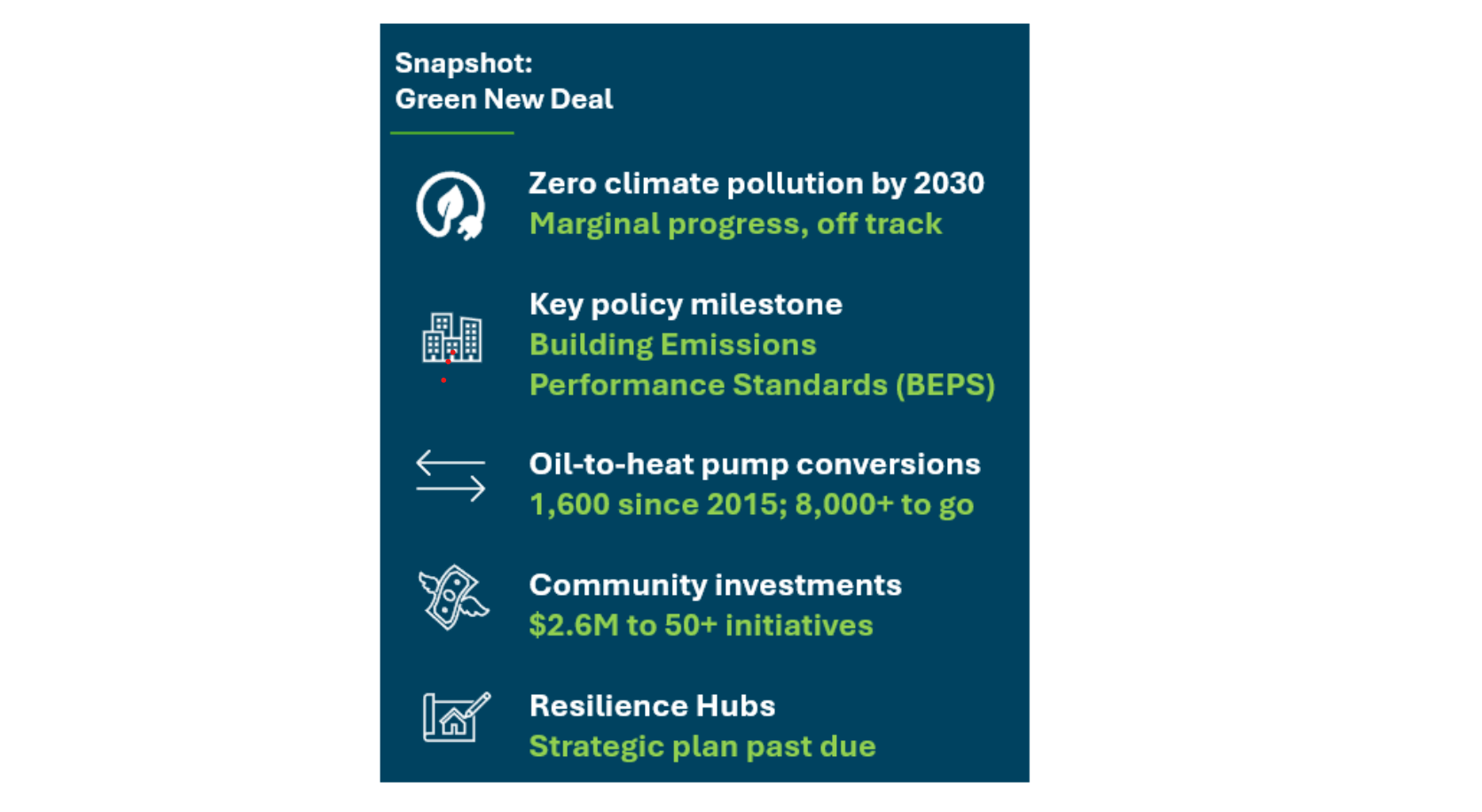
In 2019, Seattle committed to a local Green New Deal — a strategy to cut climate pollution while directing resources to communities hit first and worst by environmental and climate harms.
A major milestone came with the creation of the Payroll Expense Tax, which established a dedicated funding stream for climate work. In parallel, the 19-member Green New Deal Oversight Board has helped shape priorities and ensure those investments reflect community needs.
Together, these commitments have translated into reportable outcomes in emissions policy, community grants, and planning for climate resilience infrastructure.
Here’s a look at promises and progress to date.
Emissions Trends vs. 2030 Target
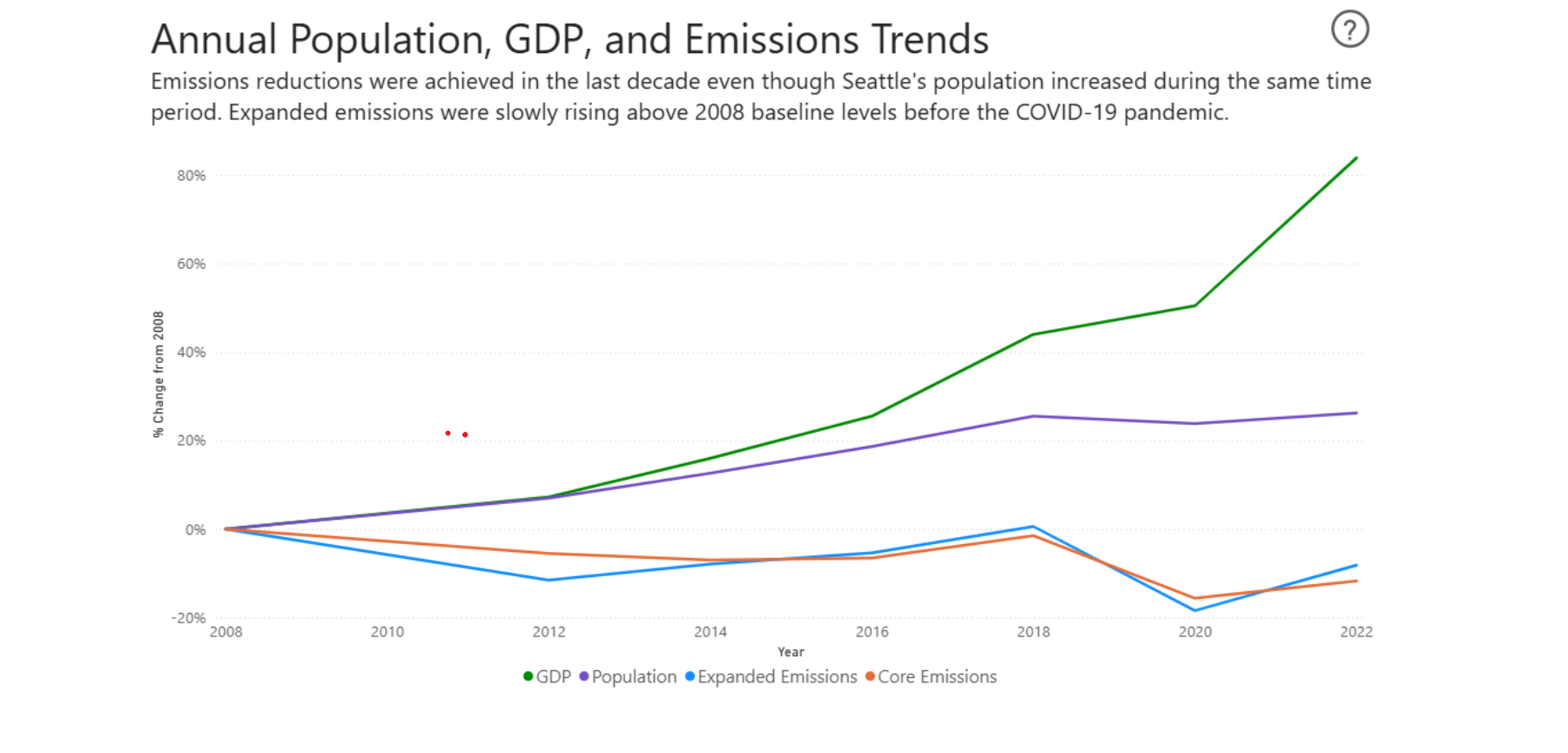
A central metric of Green New Deal progress is total greenhouse gas (GHG) emissions. According to Seattle’s most recent inventory (through 2022):
- Core emissions are approximately 12–14% below 2008 levels.
- Emissions rose about 4% between 2020 and 2022, after pandemic-related declines.
While there has been net reduction since 2008, the city remains far from the steeper annual declines implied by a 2030 “climate pollution-free” goal.
Emissions Policies
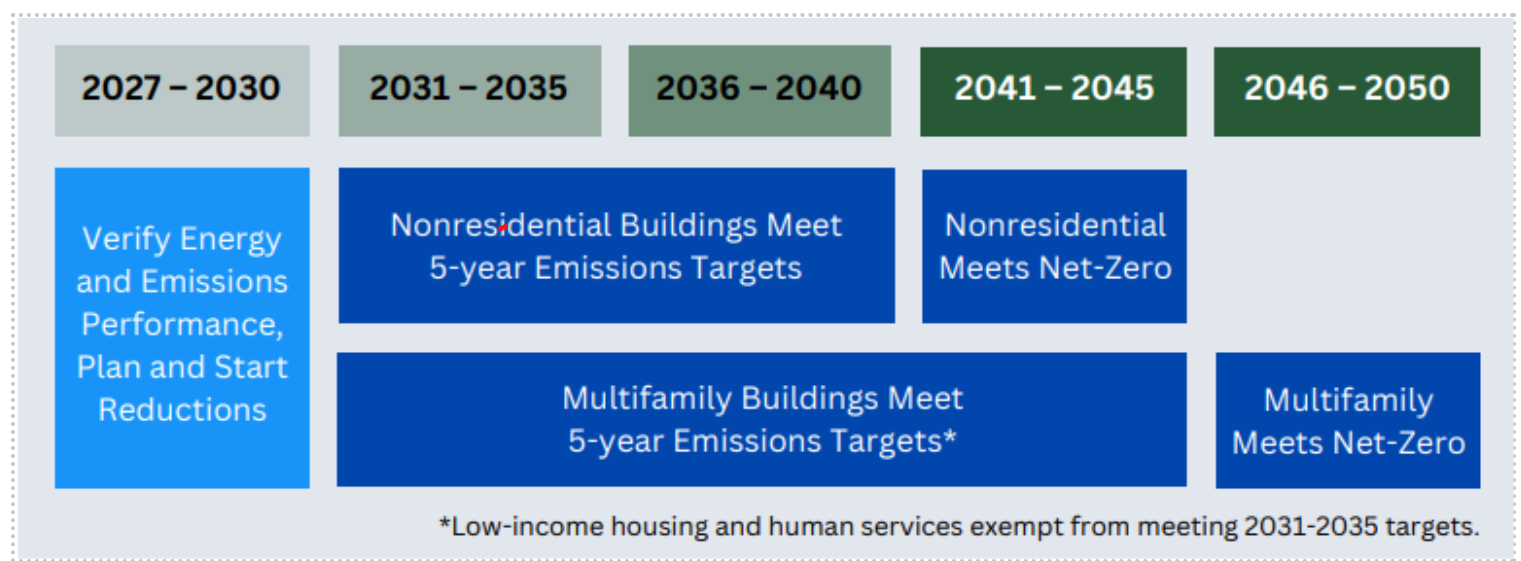
One of the clearest regulatory milestones tied to the Green New Deal era is the Building Emissions Performance Standard (BEPS), signed into law in December 2023. BEPS mandates will phase in emissions targets for existing large buildings, requiring net zero emissions by 2050.
Modeling suggests BEPS could reduce building emissions by about 27% from 2008 levels by 2050. While real-world outcomes won’t be visible until compliance data are reported over time, the standard itself is a meaningful shift from idea to action.
Other emissions-related work includes:
- Oil-to-Heat-Pump Conversions: Through the Clean Heat Program and related incentives, Seattle aims to reduce heating oil homes to zero, from the current state of 8,000-10,000. Since 2017 (two years before the Green New Deal), the City has helped more than 1,600 homes convert to energy-efficient heat pumps.
- Heavy Truck Electrification: To cut pollution from short-haul trucks serving the Port of Seattle — a burden that falls heavily on nearby communities — the City first attempted direct driver incentives but saw limited uptake. The effort has since evolved into a $1.5 million partnership with Zeem Solutions to deploy 12 electric drayage trucks, a modest first step compared with the 5,000+ trucks that serve the Seattle–Tacoma port systems.
Community Investments
Seattle’s climate strategy also invests in healthier neighborhoods, particularly in communities disproportionately affected by pollution and climate risk. Progress toward this work includes:
- Environmental Justice Fund: This fund provides grants to community-based organizations. A five-year impact report shows more than $2.6 million awarded to 43 organizations between 2018 and 2022, with funding supporting over 50 initiatives. Projects range from ecological education for Indigenous youth to urban gardening internships for people experiencing homelessness.
- Community Resilience Hubs: These are facilities designed to provide resources and support before, during, and after climate-related events. The City has completed extensive engagement to shape a Citywide Resilience Hub Plan, focusing especially on areas that face higher climate and health risks. That plan was due in 2025 but has not yet been released on the city’s Resilience Hub page.
Workforce Investments
Climate workforce development is final area of focus identified by the Green New Deal Oversight Board. To that end, City has invested $2.24 million to recruit, train, and place workers from economically distressed communities into clean energy and construction jobs. City leaders say the investment supports upwards of 260 workers. However, as of now, the city has not published data showing how many workers have been placed in livable-wage jobs because of this funding.
What to watch next
The first several years of Seattle’s Green New Deal have focused on building the foundation — establishing dedicated funding, key policies, and oversight structures. In the years ahead, progress will be measured less by plans and more by outcomes:
Will building emissions begin to fall measurably?
Can oil-to-heat-pump conversions scale citywide?
Will fleet electrification expand enough to drive meaningful reductions?
And what tangible benefits will residents experience from investments in communities and workforce development?
Ultimately, the promise of the Green New Deal will be judged not by what it set out to do, but by what changes on the ground — in the air we breathe, the homes we live in, and the neighborhoods we share.