
Katie Wilson broke into politics as a transit organizer. So it’s no surprise, as mayor, she’s quickly making public transportation a flagship priority.
In one of her first executive orders, she directed the Seattle Department of Transportation (SDOT) to prioritize fixing the notoriously unreliable Denny Way bus line.
In one of her first leadership changes, she replaced the SDOT chief with Angela Brady, whom she’s described as having “really strong operational experience”—another signal that Wilson wants transit improvements now.
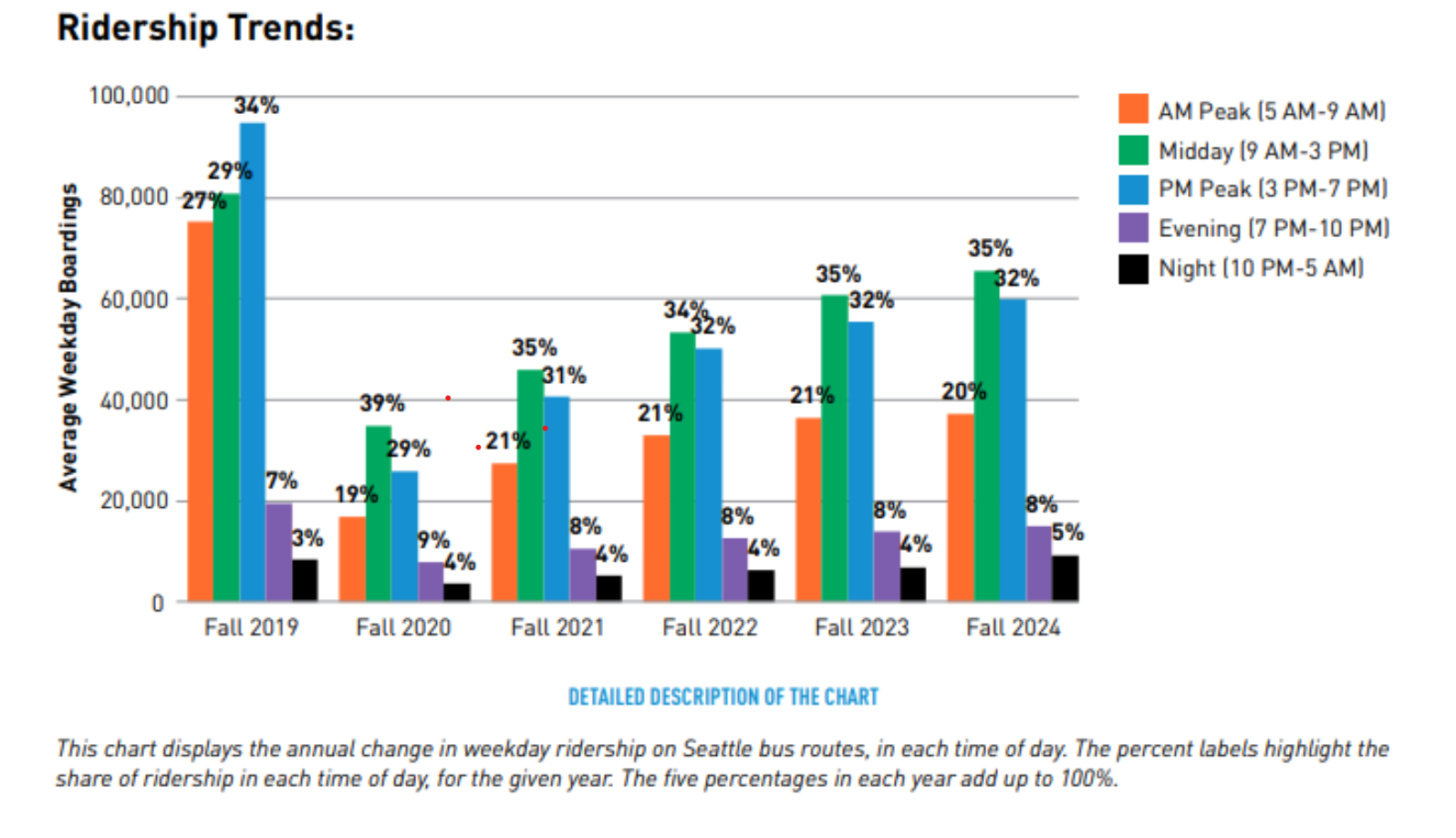
You’ll frequently see Wilson’s tout her aim for Seattle to have “irresistibly good” transit. Because right now, the public is resisting. Just look at bus ridership data that shows Seattle routes failing to fully bounce back after the pandemic despite continued population growth:
But if there’s any area where the City has constrained scope, it’s transit. The City can draw new bus lanes but it doesn’t operate the service—King County Metro does. The Mayor sits on the board of Sound Transit, but SDOT doesn’t build new tracks or run trains. City streets—and thus, bus lines—absorb traffic from Revive I-5 work, which is led by the state.
So, where can the Mayor move the needle? Here’s what we can watch for:
SDOT leadership: How quickly can Wilson’s new chief paint the lines for a dedicated bus lane on Denny Way? As we mentioned in a previous post, Denny Way plans are due in April. But pressure on the system will peak in June during the World Cup. Which other projects will receive an injection of mayoral muscle? How quickly can the agency show meaningful improvements in reliability and ridership?
Seattle Transit Measure: The City’s .15% transit sales tax expires in April of 2027. It funds service, low-income fares, and capital projects, but it’s an awkward island of city-only funding within a county-wide transportation system. Can Wilson use her coalition-building chops to renew and expand the measure to all of King County? She has said that’s her goal.
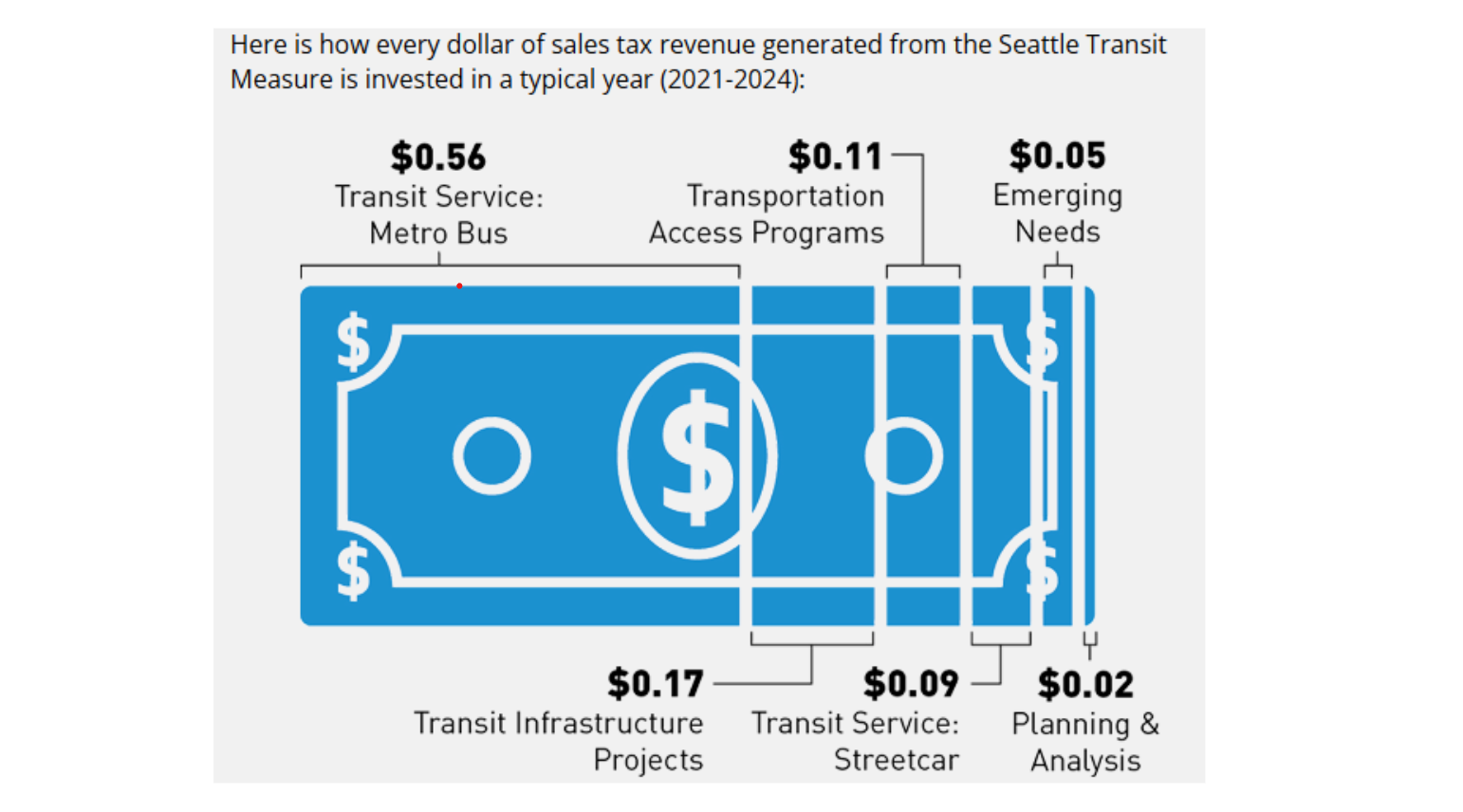
Seattle Transportation Levy: We’re in the early years of the new $1.55 billion Transportation Levy, of which about 10% is dedicated to transit. The 2026 levy delivery plan – largely devised before Wilson took office – gives us an early look at transit priorities. In addition to Denny Way, three other high-ridership bus routes (Rainier Ave., Beacon Ave., and Aurora Ave.) are slated for attention. There are 160 “spot improvements” which include TBD list of new bus-only lane and work to advance light rail connections.
In the previous levy cycle, SDOT struggled to mobilize resources and left more than $30 million unspent on transit projects. With more money across more projects this levy cycle, can the administration multitask across the meat-and-potatoes work like road and bridge repairs, while prioritizing transit upgrades? And will the long-deferred Graham Street transit station remain a line item? That’s largely a question for the budget-embattled Sound Transit, which brings us to…
Sound Transit: Besides being the population center of Sound Transit ridership, Seattle’s influence over the agency includes funding (from the 2024 Transportation Levy) and Mayor Wilson’s seat on the board. City funding is critical but represents a drop in the bucket. The 2015 levy earmark for the Graham Street Station, for example, was $10 million (2024 levy earmark unknown). Meanwhile, the project’s total cost has ballooned from $124 million to $200 million.
Graham Street is representative of a much larger problem facing Wilson and the future of rail transit: jaw-dropping increases in project costs. Since 2016, when voters approved a tax package to fund 25 years’ worth of transit projects, a $30 billion budget shortfall has emerged, blamed on inflation and design and construction complexities. At risk are neighborhood stations like Graham Street and Chinatown-International District, as well as scope and timeline for the bigger rail extension projects from West Seattle to Ballard.
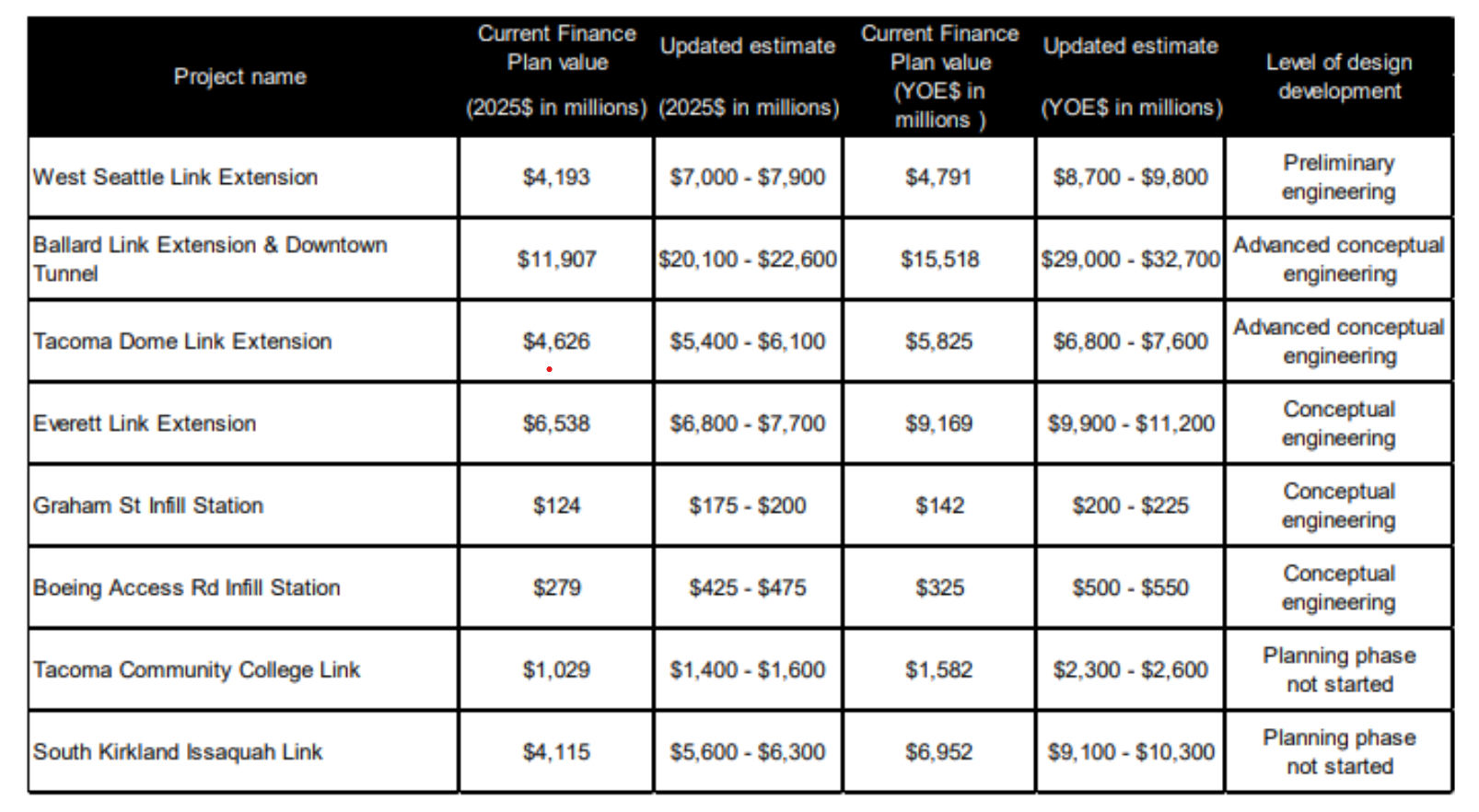
Sound Transit’s work to realign the budget is well underway, with a new plan expected mid-2026. How will Wilson advocate for retaining Seattle’s wish list against projects across all Puget Sound communities? Here’s how she framed her approach to The Urbanist: “it is very important that we’re making the best decisions possible for Seattle residents and Seattle riders, but at the same time, again, the system only works if the whole system works…so I’m looking forward to those conversations with all the board members, so that we can navigate these challenges together.”
A kind of non-answer answer, which makes it irresistible to note: for her first time in public office, she sure sounds like a politician.