
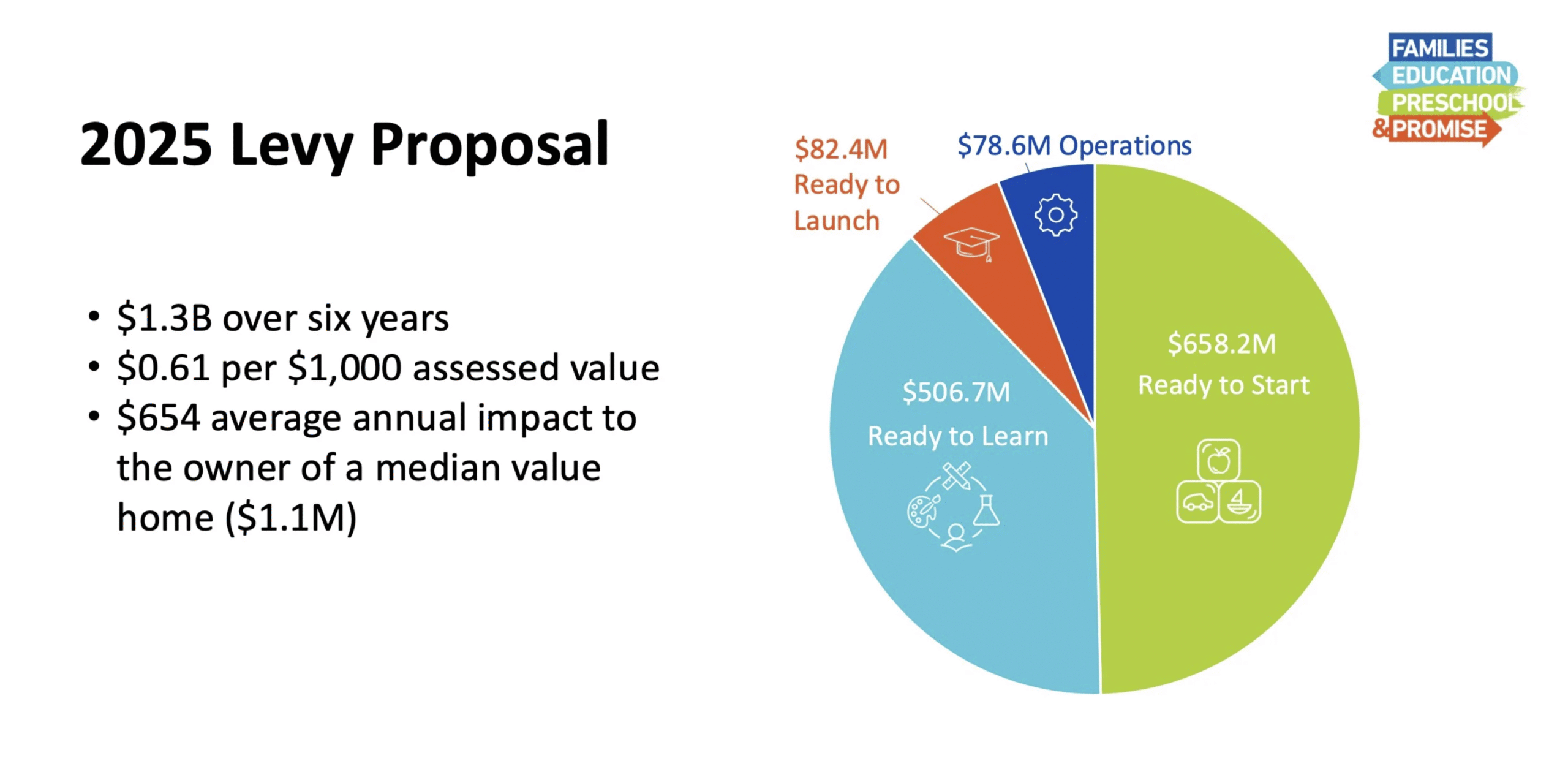
If ever there was a darling of Seattle progressive policies, it’s FEPP: the Families, Education, Preschool and Promise levy.
Voters love it. In November, nearly 80% of Seattleites voted to renew the levy at double the size of the previous package ($1.3 billion in 2025; $619 million in 2018).
Policy wonks love it. Our FEPP-funded preschool program has earned three national gold medals for quality.
Even the media loves it. In The Seattle Times endorsement of the property-tax renewal, the editorial board called the levy “the essence of creating a collective for the common good.”
In our review of FEPP, the program delivers on its spending promises and educational outcomes, but gaps in reporting transparency make it hard to connect the dots.
Here’s a high-level overview look at what you should know about FEPP and how to keep tabs on the program over time. In a future post, we’ll look at each program area one by one to report detailed outcomes.
About FEPP
At its core, FEPP is about educational access and equity from preschool through post-secondary. The City’s Department of Education and Early Learning (DEEL) administers the funds through several programs that focus on each stage of learning:
- Childcare Assistance Program vouchers help middle-income families who don’t qualify for state or federal subsidies. Reporting on program outcomes appears minimal and vague. We know it’s served more than 1,900 children since 2019, and DEEL leaders reported to the City Council “improved academic readiness and health outcomes.”
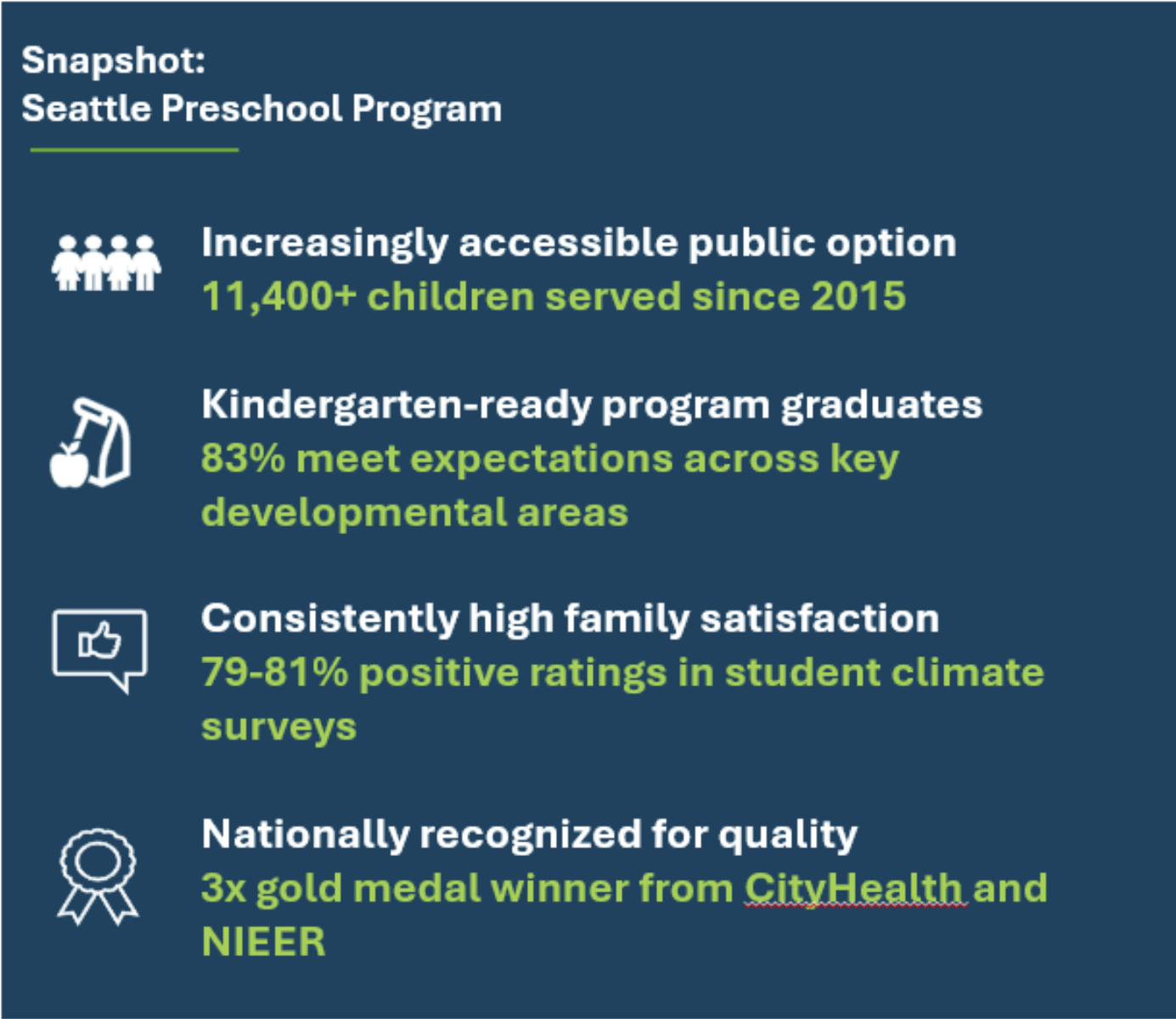
- Seattle Preschool Program is the flagship FEPP program providing publicly funded preschool through community providers and Seattle Public Schools. Key successes include the growing number of students served each year, kindergarten readiness, parents happy with the programming, and national recognition for quality.
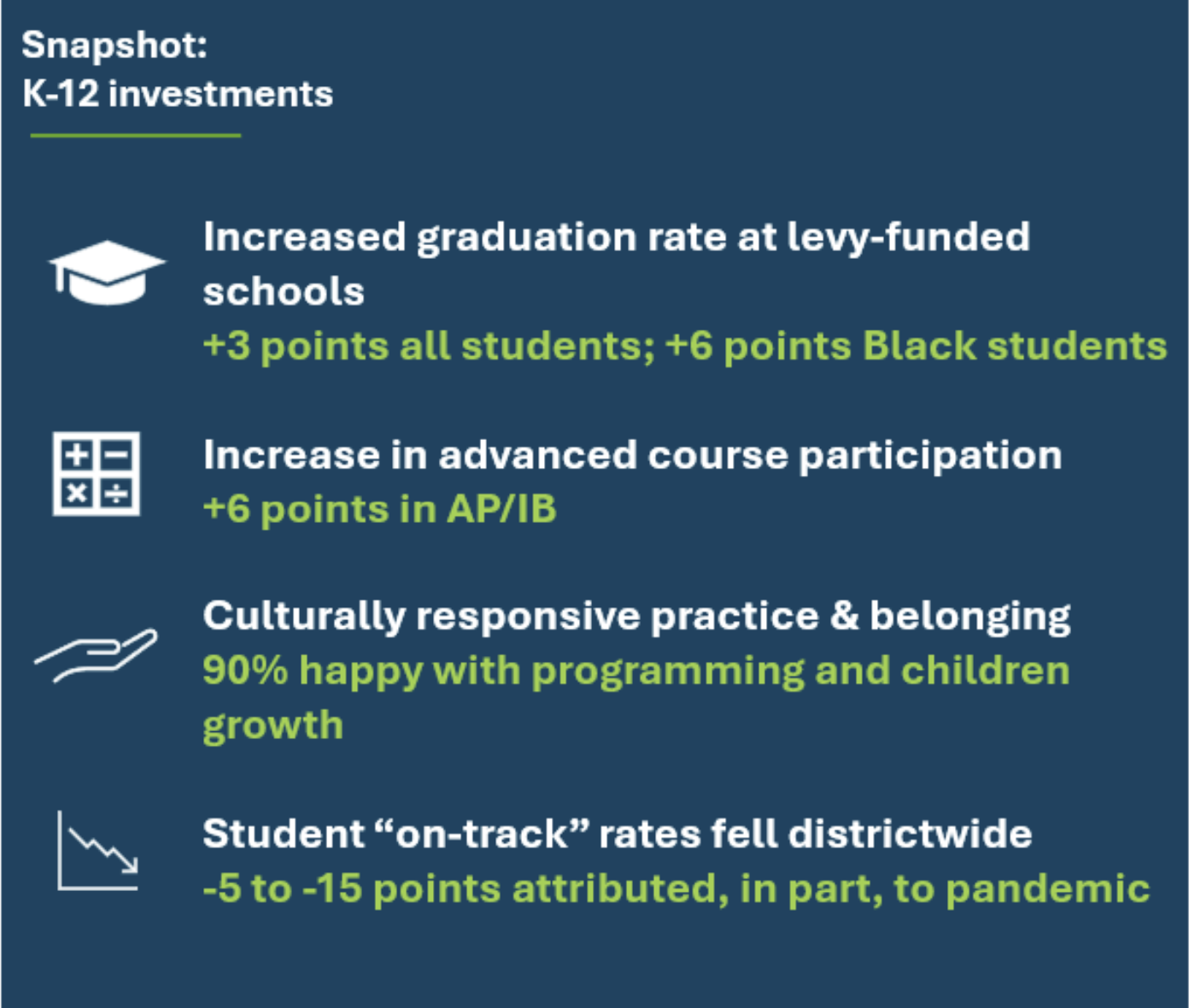
- K-12 school and community-based supports include a broad portfolio of enrichment, mentoring, culturally responsive instruction, restorative justice, college readiness services, and school-based health centers. These investments boast meaningful improvements in closing achievement gaps but some of those gains are muted by district-wide learning losses attributable to the pandemic.
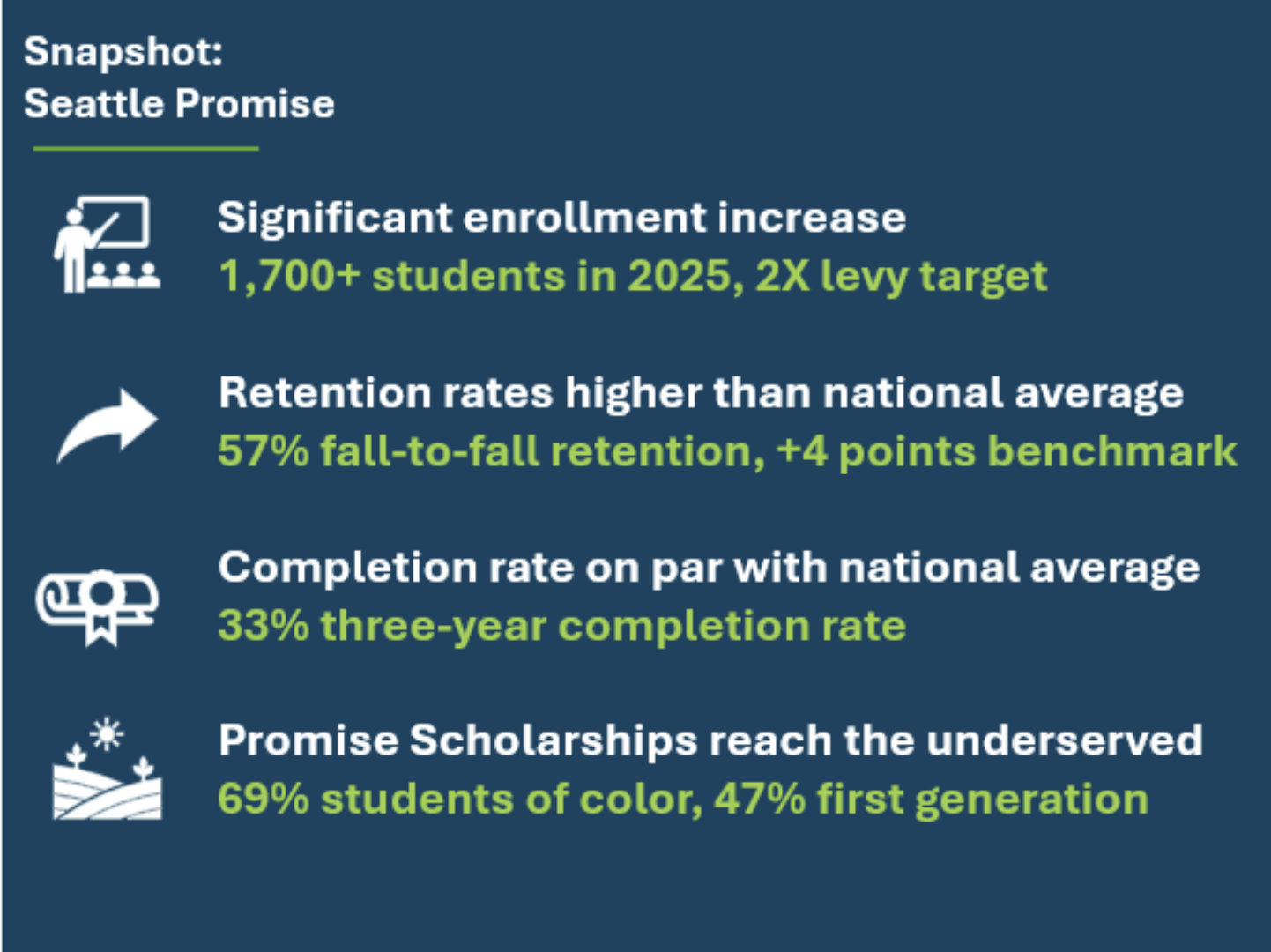
- Seattle Promise ensures free tuition at Seattle Colleges for Seattle Public Schools graduates, plus need-based aid and student supports. A snapshot view of program metrics shows gains in student enrollment, strong participation from underrepresented groups, and respectable retention and graduation rates, as compared to two-year colleges across the nation.
Looking Ahead: What to Watch in the 2025–2032 Levy
With voters approving a $1.3 billion renewal, the next chapter of FEPP will expand on what has already become one of Seattle’s signature public investments. The new levy promises more preschool seats, greater childcare access for working families, deeper K–12 supports, and continued tuition-free college pathways through Seattle Promise — all with an explicit focus on educational equity.
In the next post, we’ll piece together, in detail, a more complete picture of FEPP’s outcomes for the 2018 levy.